A BRIEF HISTORY OF THE PARISH CHURCH OF St. JOHN the BAPTIST, OLD MALDEN
St John the Baptist Church in Old Malden, London, is an active Anglican parish church with origins in the Norman period. It serves as a focal point for the local community, combining historic architecture with ongoing worship and outreach in the modern suburb of Worcester Park.
Key facts
- Denomination: Church of England
- Founded: 12th century (rebuilt 1611; restored 19th century)
- Heritage status: Grade II* listed building
- Address: Church Rd, Worcester Park KT4 7RY, United Kingdom
- Diocese: Southwark
History and architecture
A church has stood on the site since at least the late 1100s, with elements of the Norman structure still visible. The current building incorporates a 17th-century reconstruction and extensive Victorian restoration.
Architectural highlights include a medieval tower arch, early Gothic windows, and a lych gate leading from the village green. The churchyard contains gravestones spanning several centuries, reflecting Old Malden’s long settlement history.
Parish and community role
St John the Baptist Church functions as the parish center for Old Malden within the Church of England. It hosts regular Sunday and weekday services, baptisms, weddings, and community events such as concerts and charity fairs.
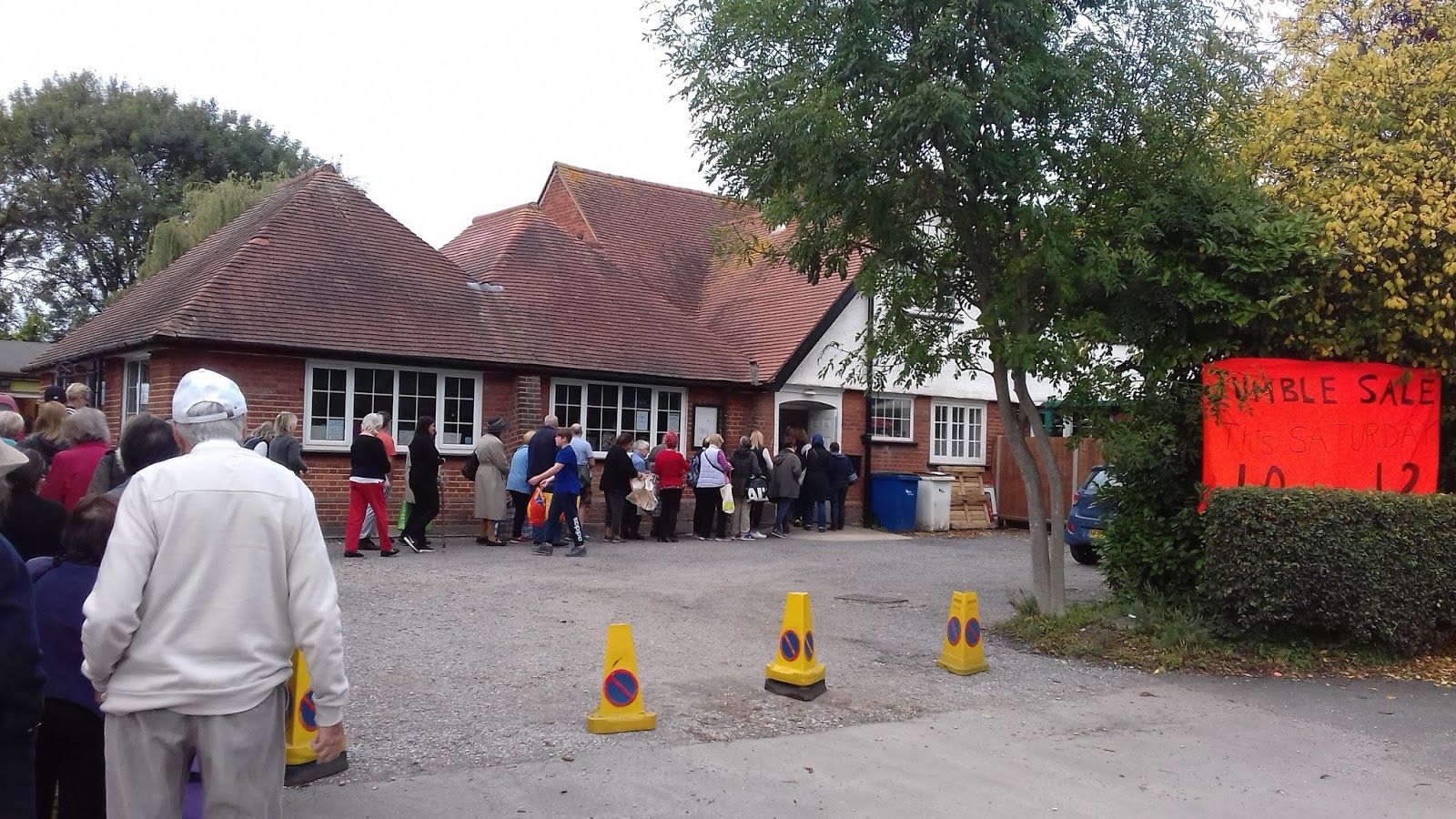
The adjacent parish hall supports local groups and educational activities, strengthening ties between the church and neighborhood residents.
Heritage and preservation
The church’s Grade II* listing recognizes its architectural and historical significance within Greater London. Conservation efforts maintain its medieval fabric and Victorian interior features, including stained-glass windows and carved woodwork.
Its setting on the village green, surrounded by mature trees, preserves a rare glimpse of rural character within suburban southwest London.
Made up of two distinct areas, the special architectural and historic interest of this area can be summarised as:
St John’s: (area A) A medieval village centre next to the Hogsmill River, containing the Saxon Church of St. John the Baptist, the site of its vicarage, the Manor House and ancient fields.
Plough Green (area B) A village green with a pond, a 15th century public house, and a picturesque group of mainly 19th century cottages.
Historic background summary
Malden takes its name from Maeldune which means 'cross upon the hill'. It is mentioned in the Domesday Book as having two manors, Meldone and Cisendone.
The cross upon the hill is thought to have formed from the foundations of the Church of St John the Baptist, which still retains Saxon features and is Grade II listed.
The area around the Church was also the original centre of the village and it is evident that there is a long history of settlement on the hill. Remains of an Iron age pottery have been found off Church Road, Roman remains in Manor Drive and some Norman and Medieval remains near the Vicarage.
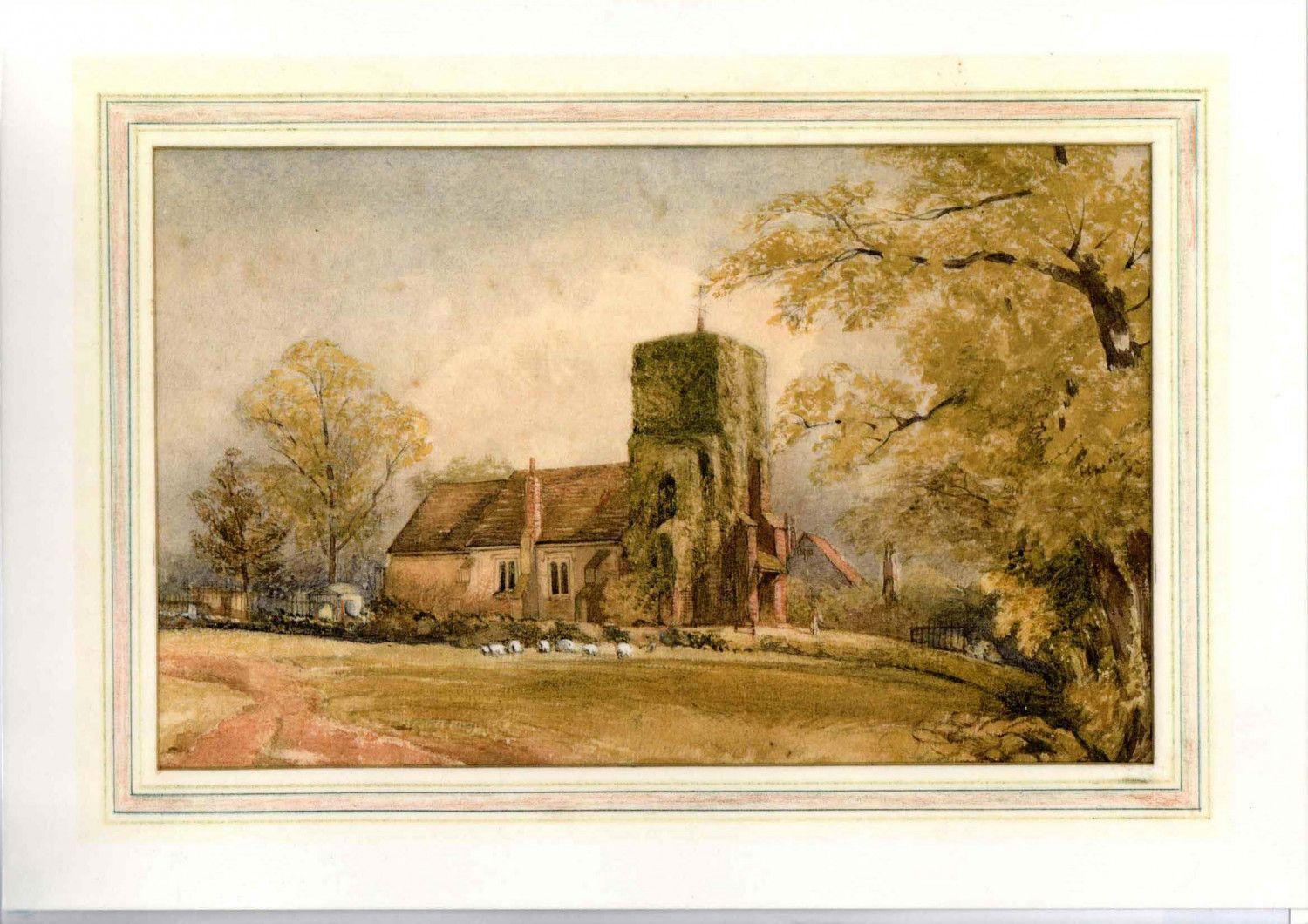
At the end of the 16th Century the Church was almost in ruins but was repaired in 1610. The nave and the tower were rebuilt in brick but the chancel only needed repairing and the old flint and stone walls still remain. By the 16th Century the Manor House had also fallen into into disrepair and was almost completely rebuilt in the 17th Century and further alterations took place in the 18th and 19th Centuries. At the east end of Church Road are Plough Green (Upper Green), the Plough Inn which is Grade II listed, the original village pond and a nearby group of old cottages of which numbers 16 to 28 are Buildings of Townscape Merit.
Listed Building (Area A)
- Manor House, Grade II listed
- Church of St John the Baptist, Grade II listed
- Old Malden War Memorial, Grade II listed
The Cross on the Hill
The area has a long history as the
ancient parish of
Malden, derived from the
Old English mæl duna, meaning 'the cross on the hill'.
Malden appears in Domesday Book of 1086 as Meldone, held partly by William de Wateville and partly by Robert de Wateville. Its domesday assets were: 4 hides and 3 virgates; 1 chapel, 1 mill worth 12s, 6½ ploughs, 5 acres (2.0 ha) of meadow, woodland worth 1 hog out of 7 hogs. It rendered £7 12s 0d.
St John the Baptist Church, close to the Hogsmill, is a Grade II listed building. The medieval church was built by Walter de Merton, Bishop of Rochester. It comprised nave, chancel and west tower. The flint south and east walls of the chancel survive. In 1611 the chancel's old flint walls were repaired and the nave and the tower rebuilt in brick. The church was restored in 1863 by T G Jackson. In 1875 a new nave and chancel were added, and in 2004 a two-storey extension was completed.
The Grade II listed Manor House, next to St John's, is also mentioned in the Domesday Book; in 1264 Walter de Merton, Bishop of Rochester, founded a college here that was later moved to Oxford as Merton College. The house was later used as a court in the reign of Henry VIII, and in the mid 18th century the house was the home of Captain Cook. In 1852 the Hogsmill River was the setting for the background of Ophelia painted by John Everett Millais.
The Parish Church of St John the Baptist Old Malden, Surrey (Thanks to W Rowley Hill 1979)

Early Iron Age
Archaeological excavations uncovered evidence that the hill at Malden had been in continuous domestic occupation since the Early Iron Age.

1086 — Saxon Church at Maeldune
The first mention of the Saxon church at Maeldune (“The Cross on the Hill”) was recorded in the Domesday Book.
Remains of the Saxon church are still present, and the lower part of the old flint and stone chancel wall was retained during the 1611 rebuilding.
There is a blocked‑up doorway with a typical Saxon triangular head.

1240 — Walter de Merton and the Manor
Walter de Merton became Lord of the Manor; he later became Chancellor of England and Bishop of Rochester.
He founded Merton College at Oxford, supported by revenue from his estates including Malden.
His coat of arms is in the heraldic window of the Lady Chapel, and Merton College still has the right to appoint the parish vicar.

1264 — Civil War and Occupation
During the Civil War, Simon de Montford’s forces occupied Malden for five months.
Read about Monfort’s Last Stand.

1348 — Black Death
The Black Death struck England; a new vicar was appointed in 1349 and another in 1350, reflecting the likely impact of the epidemic locally.

1585–1596 — Decay and Petition
The church was in a state of decay.
In 1596 the villagers of Malden petitioned Queen Elizabeth I asking for her help – but nothing was done.
By the end of the century the church was almost in ruins.

1609–1611 — Rebuilding of the Church
The church was beyond repair, but a successful appeal led to its rebuilding, completed in 1611.
Thomas Ravis, Bishop of London, and John Goode, Lord of the Manor, were involved in rebuilding the nave and tower in red brick, retaining parts of the older church walls.

Heraldic window - Ravis coat of arms
Thomas Ravis, Bishop of London
Memorial to John Goode
1742 — Gunpowder Mill Explosion
The church windows were shattered when the gunpowder mill on the Hogsmill River exploded; the blast was heard as far away as London.
A significant gunpowder mill explosion occurred on the Hogsmill River in Old Malden in 1742, shattering the windows of St John the Baptist Church.
This incident was part of the wider history of powder mills in the area, which also included sites in Long Ditton, Tolworth, and Epsom & Ewell.
- Location: The mill was situated on the Hogsmill River in Old Malden.
- Damage: The 1742 blast was powerful enough to shatter windows at the nearby St John the Baptist Church.
- Context: These mills were part of the extensive 18th-century gunpowder industry in the surrounding Surrey countryside, which frequently saw explosions due to the dangerous nature of the work.
- Other Incidents: Historical records mention other nearby mills, including those in Ewell, where a notable explosion occurred in April 1863.
The site of the Old Malden mill is part of the local heritage, highlighting the dangerous, yet essential, industrial history of the Hogsmill area.

1827 — Ivy and Neglect
Since the rebuilding of 1611, not much had been done to the fabric of the church.
It had almost disappeared inside a shroud of ivy.
In fact, a boy was regularly sent up to collect chickens' eggs from the nests in the ivy.

1843–1844 — Alterations
The South porch was demolished and a new entrance formed through the tower.

1847 — Thomas Weeding’s Contribution
Thomas Weeding was a prominent local landowner in Old Malden, living at a residence called Fullbrooks. The Fullbrooks estate later gave its name to the modern Fullbrooks Avenue and surrounding area.
The Weeding family were regarded as “local worthies” — meaning respected, influential figures in the village community — likely established by a wealthy London merchant who acquired and developed land in the parish. Their former mansion and grounds once stood near what later became housing in the area.
In 1847, Thomas Weeding paid for the nave of St John the Baptist Church to be fitted out with box pews at his own expense — a common style of enclosed seating in Anglican churches at that time.
Box pew is a type of church pew that is encased in panelling and was prevalent in England and other Protestant countries from the 16th to early 19th century.
In colonial New England, it was common for the colonial meeting house to have box pews.
Families would typically sit together in a box pew, and it is theorized that the concept of the box pew resulted from the fact that the early meeting houses not heated, and the walls of the box pews would minimize drafts, thus keeping the occupants relatively warmer in the winter.
This was a significant donation reflecting his wealth and his role in supporting the parish church.
A few years after Weeding’s improvements, when Rev. Canon William Chetwynd Stapylton became vicar in 1850, he clashed with Weeding about the church pews — especially the locked doors on the box pews, which were intended to keep seats reserved for certain parishioners.
The vicar considered them improper and had the locks removed, despite Weeding’s objections.
Those box pews were eventually removed altogether during later restoration work in 1866–67, replaced by the open pews still present today.

1850 — Long‑Serving Vicar
Rev. Canon William Chetwynd-Stapylton was a Church of England priest and long-serving Vicar of St John the Baptist Church, taking up the post in 1850.
Although initially intending to serve for only a couple of years, he remained in the parish for 44 years and became one of its most influential and remembered clergy.
He was born on 15 May 1825 in Chessington, Surrey, was an Oxford graduate and Fellow of Merton College, and after his long ministry in Old Malden he died on 4 March 1919 in Tunbridge Wells and is buried at St John’s.
His contributions to the parish
During his incumbency:
- He presided over a time of significant growth in the parish, much of it driven by the arrival of the railways in the 1840s–1860s and the resulting population increase.
- He was instrumental in major building works at St John’s. After earlier restoration efforts, in 1875 a new, larger nave and chancel were built, more than doubling the size of the church to accommodate the expanding congregation — a project he helped to envision and raise funds for.
- He championed education in the parish, and was a driving force behind the founding of Malden Parochial School in 1864, established to provide schooling for local children.
- Under his leadership the pattern of worship at St John’s changed: whereas Communion had previously been celebrated only a few times a year, it became a regular and central part of parish life.
Canon Chetwynd-Stapylton was widely regarded in later parish histories as a generous benefactor and committed pastor, remembered not only for the physical expansion of the church building but also for his pastoral care of a growing community.

1866–1867 — Restoration and Expansion
Contemporary accounts note that by 1866–67 the parish population had already grown significantly — estimates from local records show it grew from around 416 in 1871 to 525 by 1881 — meaning the existing building was inadequate without enlargement.
At the same time the north wall was opened out with an arcade and a north aisle was added as the church expanded.
North Aisle Added
- The north wall of the old church was removed to allow expansion.
- It was replaced by an arcade — a series of arches — supported on a central pillar.
- From this arcade a north aisle was created, adding more space for worshippers.
- At the same time, the interior was restored: the box pews were removed and replaced with the open pews still seen today.
This work was part of a broader Victorian-era restoration movement, when many medieval and post-medieval churches were altered to “open up” interiors, replace closed box pews and adapt seating for larger congregations.

1875 — New Nave and Chancel
- The new north aisle added in 1866–67 was taken down.
- The main body of the church — the old nave — was removed.
- A new nave and chancel were built to significantly enlarge the building and better accommodate the congregation.
- The 17th-century portion of the church (the Jacobean nave and tower rebuilt in 1611) was retained but became the south aisle/displayed as the Lady Chapel in the expanded plan.
- The altar from the old church was incorporated into the new chancel, and a stone panel was installed commemorating where the Lord’s table had stood previously.
This rebuilding in 1875 was designed by T. G. Jackson, an architect known for Victorian church restorations and additions.

1894 — Lady Chapel Established
In 1894, an altar was reinstated in the old part of the church, which has since served as the Lady Chapel, dedicated to the Virgin Mary.
This small chapel provided a quiet space for prayer and smaller services, linking the medieval origins of the building with Victorian devotional practices.
Over the years, it has retained its historical character and continues to be a cherished area for reflection and private worship within St John’s, preserving a connection to the church’s long and layered history.

1892
ButtonEarly 1900s — Oak Screen and Reredos
- In the early 1900s, a carved oak screen was installed between the nave and the chancel of the church.
- At the same time, a reredos (a decorated screen or panel behind the high altar) was added in memory of Canon William Chetwynd Stapylton, who was a long-serving vicar and generous benefactor of the parish during the late 19th century.
- Canon Stapylton served as Vicar of St John’s for 44 years from 1850 and was remembered for his substantial contributions to the church and community, including periods of restoration and development in the 1860s and 1870s.
What these features are
Carved oak screen
- This type of screen typically sits at the point where the nave (where the congregation sits) opens into the chancel (area around the altar) and is often richly carved with decorative motifs.
- In many English parish churches, screens like this were added or restored in the late 19th/early 20th century as part of the Victorian/Edwardian interest in medieval church fittings.
Reredos
- A reredos is a panel or structure placed behind the altar, usually elaborately decorated with carvings, paintings or reliefs.
- It serves both a decorative and devotional purpose, drawing focus to the high altar.
Canon Chetwynd Stapylton’s long service and legacy in the parish were honoured through these additions soon after his tenure, tying them to early 20th-century enhancements of the church’s interior.

1922 — Electric Lighting Installed
In 1922, electric lighting was installed at St John the Baptist, Old Malden, bringing the church into the modern age.
Until then, services — especially in winter — relied on candles and oil or gas lamps. While atmospheric, they produced smoke, soot, and posed a fire risk.
The introduction of electric lighting made the building safer, brighter, and more suitable for evening worship and community events.
The new lighting would have:
- Improved visibility for the clergy and choir
- Allowed clearer appreciation of the carved oak screen and high altar
- Made winter services more welcoming
- Reduced maintenance caused by smoke damage
The arrival of electricity reflected wider developments in Old Malden during the early 20th century, as the growing community embraced modern technology while preserving its historic church.
1933 — Priest’s Vestry Added

In 1933, a dedicated Priest’s Vestry was added to the north side of St John the Baptist, Old Malden.
The vestry, visible to the left of the church when viewed from the north, provided a private and practical space for the clergy to prepare for services. Before this addition, robing and preparation would have taken place in more limited or shared areas within the church.
The new vestry allowed for:
- Safe storage of vestments, books, and communion vessels
- A quiet space for prayer and preparation before worship
- Improved organisation for baptisms, weddings, and funerals
- Greater efficiency as the parish continued to grow
Architecturally, the vestry was designed to harmonise with the existing church building, using sympathetic materials and proportions so that it blended with the historic structure rather than competing with it. Its position on the north side maintains the traditional liturgical arrangement of the church.
The addition reflects the steady development of St John’s during the early 20th century — adapting to the needs of a growing parish while respecting its centuries-old heritage.
1975 — Centenary Restoration
The whole church was restored to commemorate the centenary of the enlargement of 1875, marking an important milestone in the life of the parish.
The work aimed to maintain the historic character of the church while carefully renewing parts of the building for continued use by the congregation and the local community.

1986 — 900th Domesday Anniversary

In 1986 the parish marked the 900th anniversary of the Domesday Book, the great survey of England commissioned by William the Conqueror in 1085 and completed the following year.
The Domesday Book recorded land ownership, settlements, and important features across the country. It provides the earliest written reference to a church at Malden, showing that a place of Christian worship existed in the parish more than 900 years ago.
This record demonstrates the long history of worship in the area and links the present parish church of St John the Baptist Church Old Malden with the earliest documentary evidence of the community in Norman England.
2004 — Contemporary Extension

A two-storey contemporary extension was built on the north side of the church, providing vestries, meeting rooms, a kitchen and toilet facilities, greatly improving the church’s ability to host services, events and community activities at St John the Baptist Church Old Malden.
2011 — 400th Anniversary of Rebuilding

Celebrations took place for the 400th anniversary of the rebuilding of the church in 1611.
A marchpane church made as part of the 400th anniversary celebrations.